Engagement Is Not Learning: What Immersive STEM Has to Prove

Technology can make education more exciting. Virtual reality can place students inside a cell, beside a molecule, or inside a simulated laboratory. Artificial intelligence can answer questions instantly. Interactive platforms can reward participation, track clicks, and keep students engaged.
But there is an important question that educators cannot afford to ignore:
Did the student actually learn?
A new report from the American Psychological Association argues that engagement with educational technology should not be confused with learning. A student may spend time inside an application, complete activities, interact with animations, or even produce better work with the help of artificial intelligence without necessarily developing knowledge or skills that remain after the technology is removed. The APA argues that a stronger measure of learning is whether students can retain, transfer, and apply what they learned outside the digital environment. (American Psychological Association)
That distinction matters as schools rapidly adopt AI, virtual reality, simulations, educational games, and other immersive tools.
The Technology Is Not the Lesson
A headset does not create learning simply because a student wears it.
An AI assistant does not create learning simply because it produces the correct answer.
And an interactive simulation does not create learning simply because a student enjoys using it.
Technology should be viewed as an instrument. The educational design surrounding that instrument determines whether the experience becomes meaningful.
The learner still needs to observe, question, predict, practice, make mistakes, explain results, and demonstrate understanding.
This is particularly important in STEM education, where students eventually have to move from seeing science to doing science.
A student who watches someone micropipette has been exposed to micropipetting.
A student who performs the technique, understands the volumes involved, recognizes an error, corrects the mistake, records the procedure, and can perform it again has begun developing scientific competence.
Those are very different outcomes.
Virtual Reality Still Has Enormous Potential
The warning against confusing engagement with learning is not an argument against immersive technology.
In fact, recent research provides encouraging evidence for virtual reality when it is connected to appropriate educational design.
A 2026 meta-analysis examining 37 experimental and quasi-experimental studies found that VR-assisted learning produced a significant moderate-to-large positive effect on students' critical-thinking development. Importantly, however, the results varied depending on factors such as educational level, subject area, instructional method, and how VR was integrated into teaching. (ScienceDirect)
That may be the most important part of the finding.
VR itself is not the educational strategy.
The strategy is what educators ask students to accomplish while using VR.
Immersion can create access to environments students otherwise could not experience. Interaction can allow students to manipulate systems that would be expensive, dangerous, microscopic, or impossible to reproduce in a traditional classroom.
But those experiences become education only when they are tied to meaningful learning objectives.
AI Presents the Same Challenge
Artificial intelligence makes this distinction even more important.
The APA report specifically warns that generative AI can improve a student's immediate performance without necessarily improving the student's underlying ability. A better essay, answer, or assignment does not automatically mean that the learner became a better writer, thinker, or scientist. (American Psychological Association)
That does not mean students should simply be prevented from using AI.
A more powerful approach may be to teach students how to challenge it.
Ask:
Why did the AI provide that answer?
What evidence supports it?
What information is missing?
Can you verify the response experimentally?
Can you explain the concept without the AI?
At that point, AI becomes something very different from an answer generator.
It becomes another object of scientific investigation.
The RNL Standard
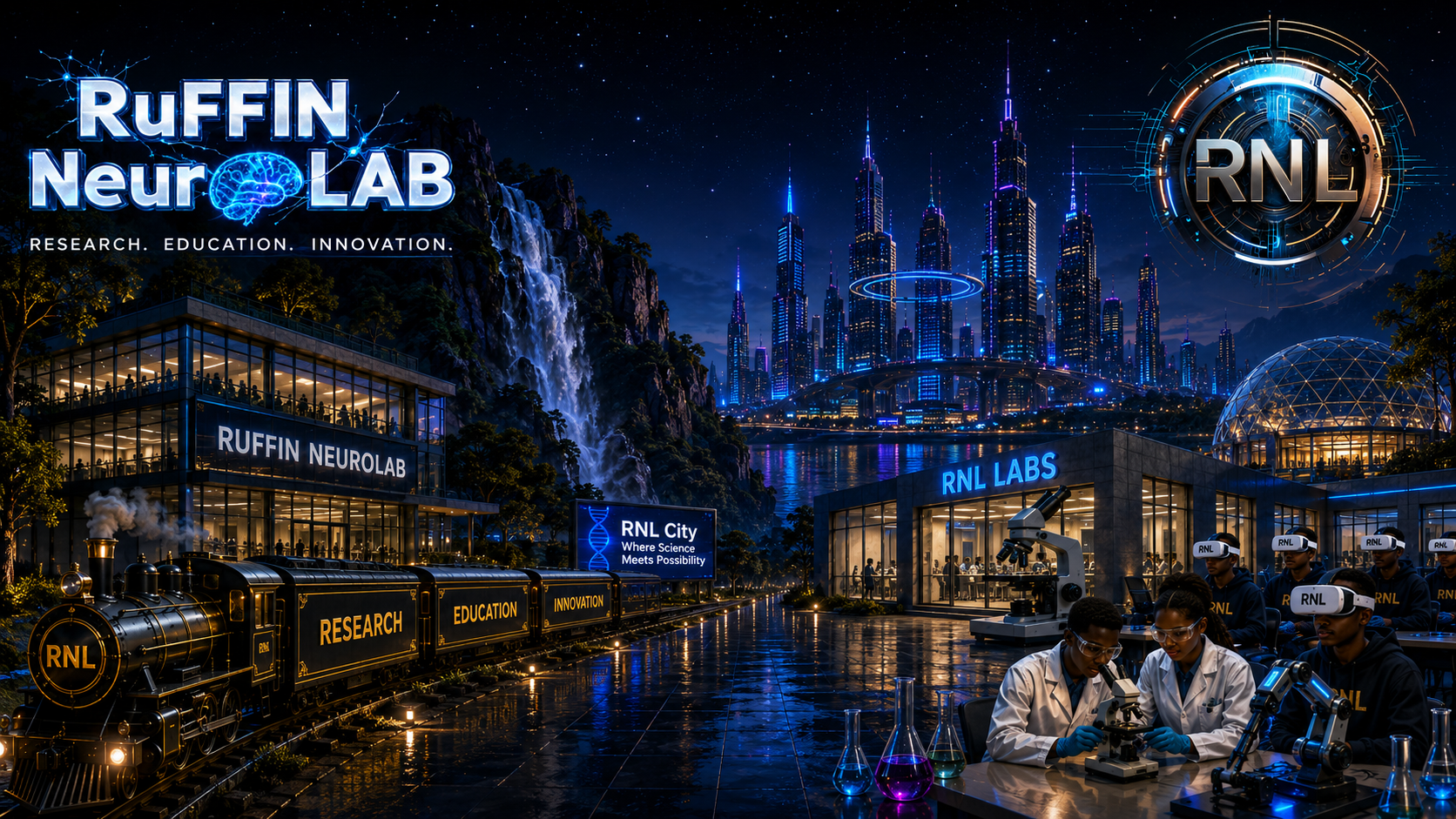
At Ruffin NeuroLab, the goal has never been technology for technology's sake.
The question is not simply whether something looks impressive.
The question is:
What can the learner do after the experience that they could not do before it?
That standard should apply whether the learning environment involves a traditional laboratory, an immersive world, an AI system, a research activity, or a classroom.
Exposure matters.
Engagement matters.
Curiosity matters.
But ultimately, they must lead somewhere.
The future of STEM education will probably contain considerably more AI, virtual reality, simulations, immersive environments, and interactive technology.
That future can be extraordinary.
But we should demand more than attention.
We should demand learning.
Celebrate the Resource.
Ruffin NeuroLab, LLCRuffinNeuroLab.com
#RuffinNeuroLab #RNL #STEMEducation #VirtualReality #ArtificialIntelligence #ImmersiveLearning #ScienceEducation #Neuroscience


Comments